Ozeki, S.*, Renner, A.*, Rafeeq, R., Beynon-Fankhauser, J., Manera, J.L., Amcoff, M., Peters, A., Bertram, M.G., Kolm, N., Martin, J.M., Wong, B.B.M.†, Fitzpatrick, J.L.† 2026. Widespread endocrine-disrupting pollutant alters male courtship behavior in a livebearing fish. Behav. Ecol. 37, arag118. https://doi.org/10.1093/beheco/arag118 | PDF * Co-first authors. † Co-senior authors.
ABSTRACT
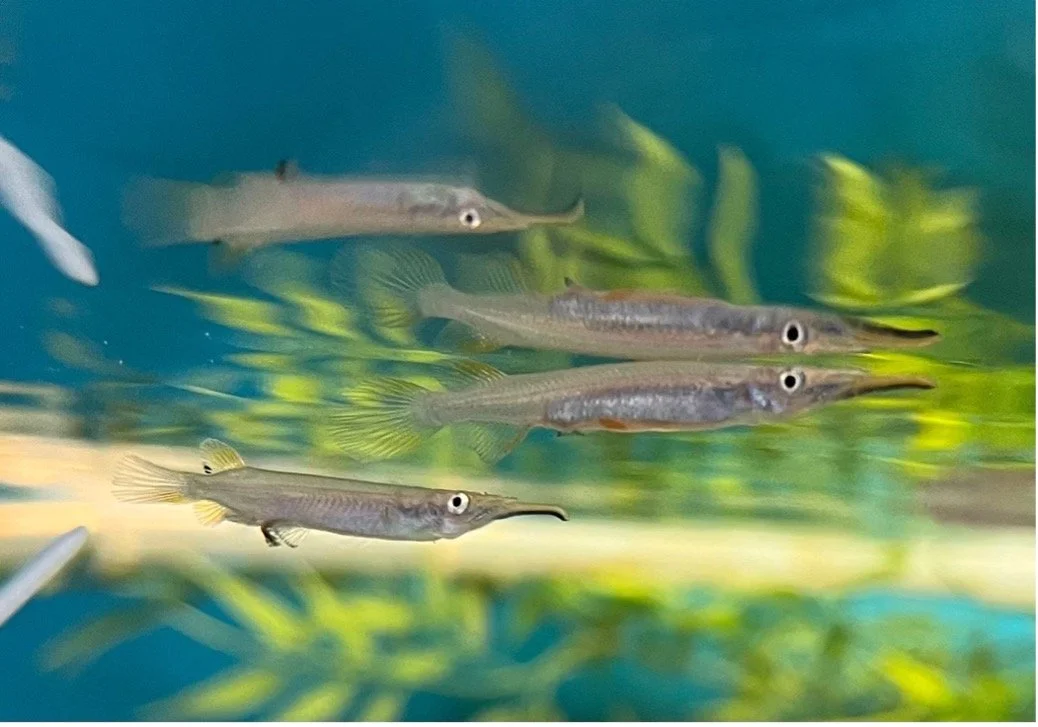
Sexual selection is a potent evolutionary force shaping both precopulatory courtship behavior and postcopulatory sperm traits, with male reproductive effort often adjusted to social and mating context. Endocrine-disrupting contaminants are predicted to alter how males allocate reproductive effort, yet their behavioral effects across different mating contexts remain poorly understood. We examined whether exposure to 17α-ethinylestradiol (EE2; 43 to 1,100 ng/L), a synthetic estrogen used in the contraceptive pill that enters aquatic systems via wastewater effluent, alters male courtship behavior and sperm traits in a freshwater fish (Dermogenys collettei). Using assays in which males encountered females either sequentially or simultaneously, we quantified courtship behavior and latency to interact, alongside sperm viability, morphology, and performance. Exposure to high EE2 consistently reduced male mating effort. Exposed males were slower to initiate interactions with females and expressed less courtship behavior in both sequential and simultaneous assays. In contrast, EE2 had no detectable effects on sperm traits, and male preferences for female gravid spot size were unaffected. These findings suggest estrogenic pollution can disproportionately reduce mating effort, revealing a decoupling between behavioral and postcopulatory responses.