Kolar, B., Alygizakis, N., Bertram, M.G., Herrero-Villar, M., Maack, G., Treu, G., Durjava, M. 2026. Regulatory aspects of risks posed by veterinary medicinal products to European necrophagous birds: a case study with nonsteroidal anti-inflammatory drugs (NSAIDs). Environ. Int. 217, 110575. https://doi.org/10.1016/j.envint.2026.110575 | PDF
ABSTRACT
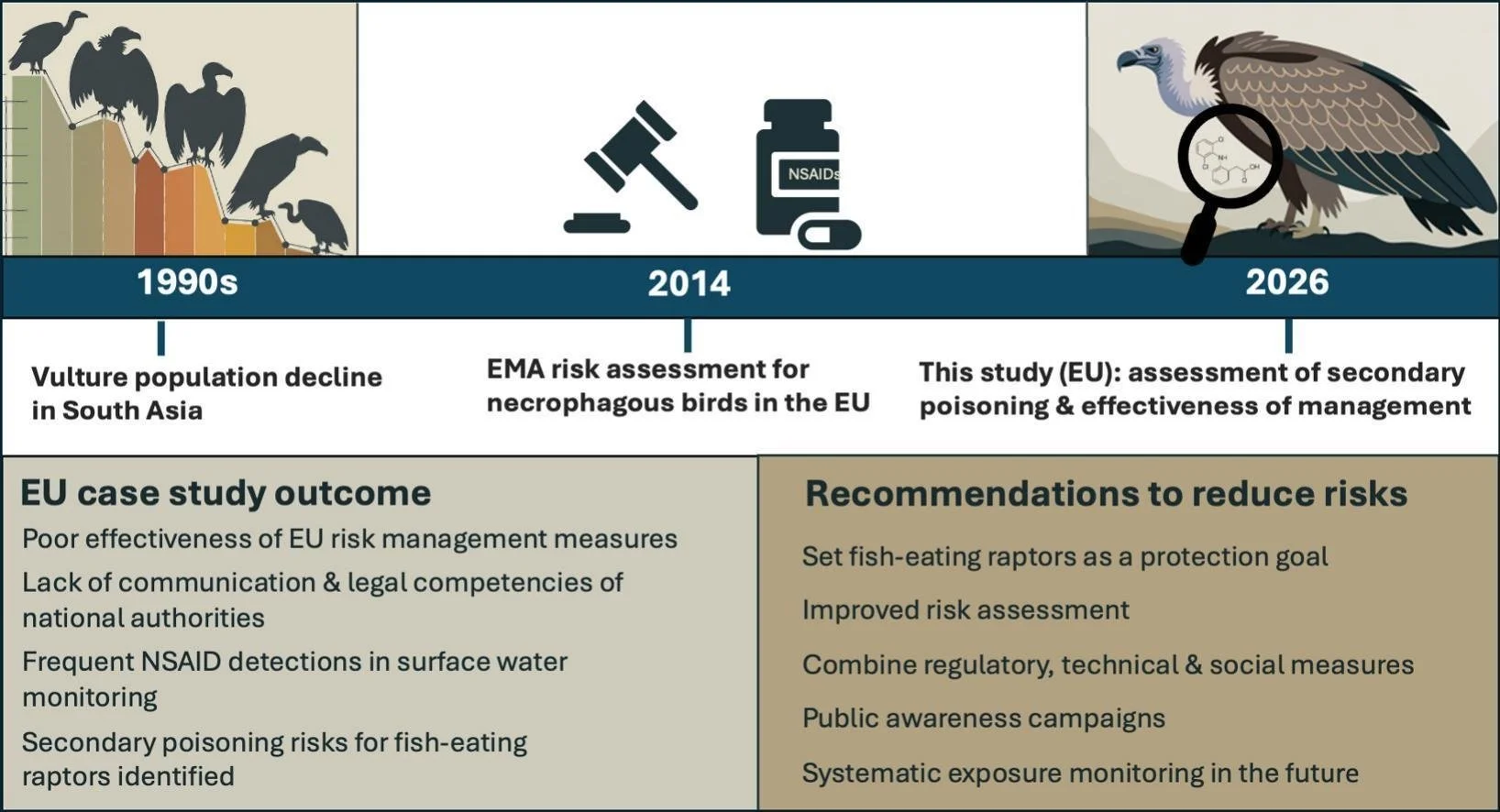
Nonsteroidal anti-inflammatory drugs (NSAIDs) are used in human and veterinary medicine to treat pain and inflammatory diseases. However, the uncontrolled treatment of free-roaming and sheltered livestock with NSAIDs, mainly diclofenac, has caused catastrophic impacts on the biodiversity of necrophagous birds. For instance, a decline of up to 95 % in populations of various species of vultures occurred in South Asia from the late 1990 s to the early 2000 s. In the European context, the European Commission mandated the European Medicines Agency (EMA) to assess the risk posed by diclofenac to necrophagous bird populations in 2014. The risk assessment conducted by the EMA in 2014 identified the risks to affected species. Specific risk-management measures were proposed to facilitate an acceptable level of protection for necrophagous bird populations. Over the last ten years, just one evident death of a necrophagous bird due to intoxication with diclofenac was recorded in Europe. However, the concentrations of different NSAID residues detected in bird carcasses and tissues indicate exposure of avifauna to this group of pharmaceuticals, suggesting that scavenging birds in Europe are not protected against NSAIDs and other veterinary medicines used in animals for human consumption. In addition, NSAIDs are widely used in human medicine and are commonly detected in surface waters of EU member states. We assessed the risk of secondary poisoning based on the detected concentrations of diclofenac in surface waters and identified a risk for piscivorous raptors. We conclude that obligatory risk assessment followed by risk-management measures during the authorisation process does not sufficiently reduce the risk of pharmaceuticals for necrophagous and piscivorous raptors. We propose recommendations and alternative risk-management strategies, underscoring the urgency of protecting European necrophagous and piscivorous raptor populations to sustain the crucial ecosystem services they provide.