New pharmaceuticals in agroecosystems paper out in ACS ES&T Toxicology
Carter, L.J., Brand, J.A., Brooks, B.W., Herrero-Villar, M., Nielsen, K., Bertram, M.G. Early-access version. Understanding the importance of ecological niches for pharmaceutical transfer among agroecosystems and adjacent natural habitats: the need for precision exposure science. ACS ES&T Toxicol. https://doi.org/10.1021/acsesttox.6c00027
ABSTRACT
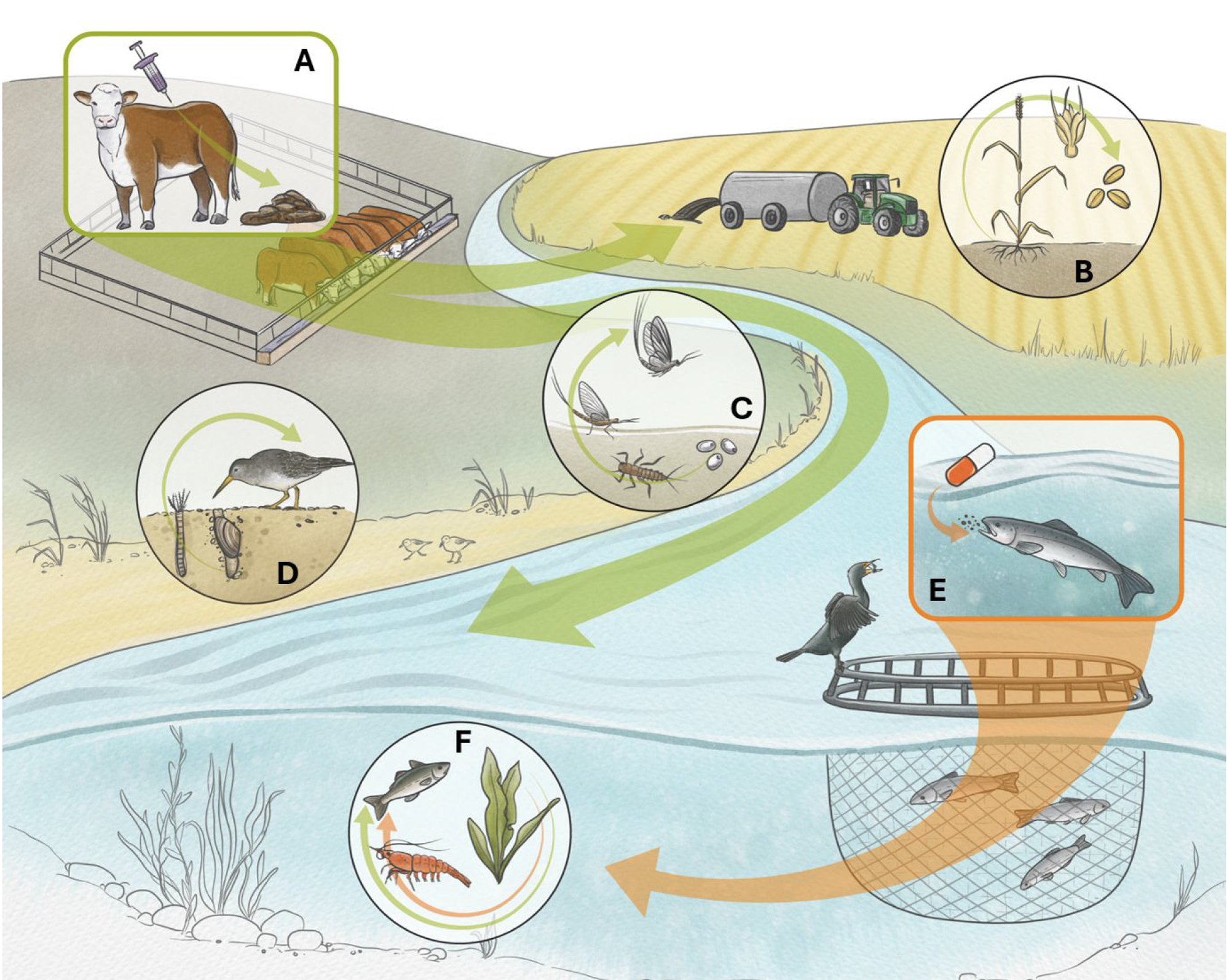
Pharmaceutical pollution is now pervasive in ecosystems around the globe and represents a growing component of the broader environmental challenge posed by novel entities. Recent assessments indicate that the Earth System Boundary for Novel Entities has already been surpassed, underscoring the urgency of understanding where and how active pharmaceutical ingredients (APIs) move through the environment and affect exposed wildlife. To date, however, most research on APIs has focused on their presence and impacts in freshwater, coastal marine, and urban aquatic systems. While this focus has been warranted, it has also resulted in significant research gaps regarding exposure pathways and effects of APIs in other environments, including agroecosystems. This is a cause for concern given that agroecosystems are complex landscapes of great ecological and economic importance, where APIs can accumulate via multiple pathways. Here, we highlight how agroecosystems constitute a critical yet underappreciated exposure context for APIs, with widespread potential implications for soil health, crop productivity, terrestrial−aquatic food webs, and human exposure. We further summarize current knowledge on API occurrence and mobility in these systems, identify major exposure routes, and outline emerging ecological effects. We argue that existing risk assessment approaches for APIs in agroecosystems are insufficient. We instead call for scenario-specific frameworks that draw on advances in precision exposure science within ecotoxicology. To support this timely opportunity, we present a flexible conceptual model that is built on catchment-based assessment, incorporates API flows among biota and across gradients of environmental compartments, and is reflective of ecosystem complexity. Advancing understanding of API dynamics in agroecosystems is essential for improving exposure models, informing effective regulation, and guiding mitigation of novel entities in systems on which both humans and wildlife depend.