New spatial cognition paper in ES&T
Manera, J.L., Moore, E.R., Martin, J.M.†, Bertram, M.G.†, Wong, B.B.M.† 2026. Neuroactive pollution disrupts cognition in fish by causing sex-specific effects on spatial learning. Environ. Sci. Technol. 60, 10640–10650. https://doi.org/10.1021/acs.est.6c00552 | PDF † Co-senior authors.
ABSTRACT
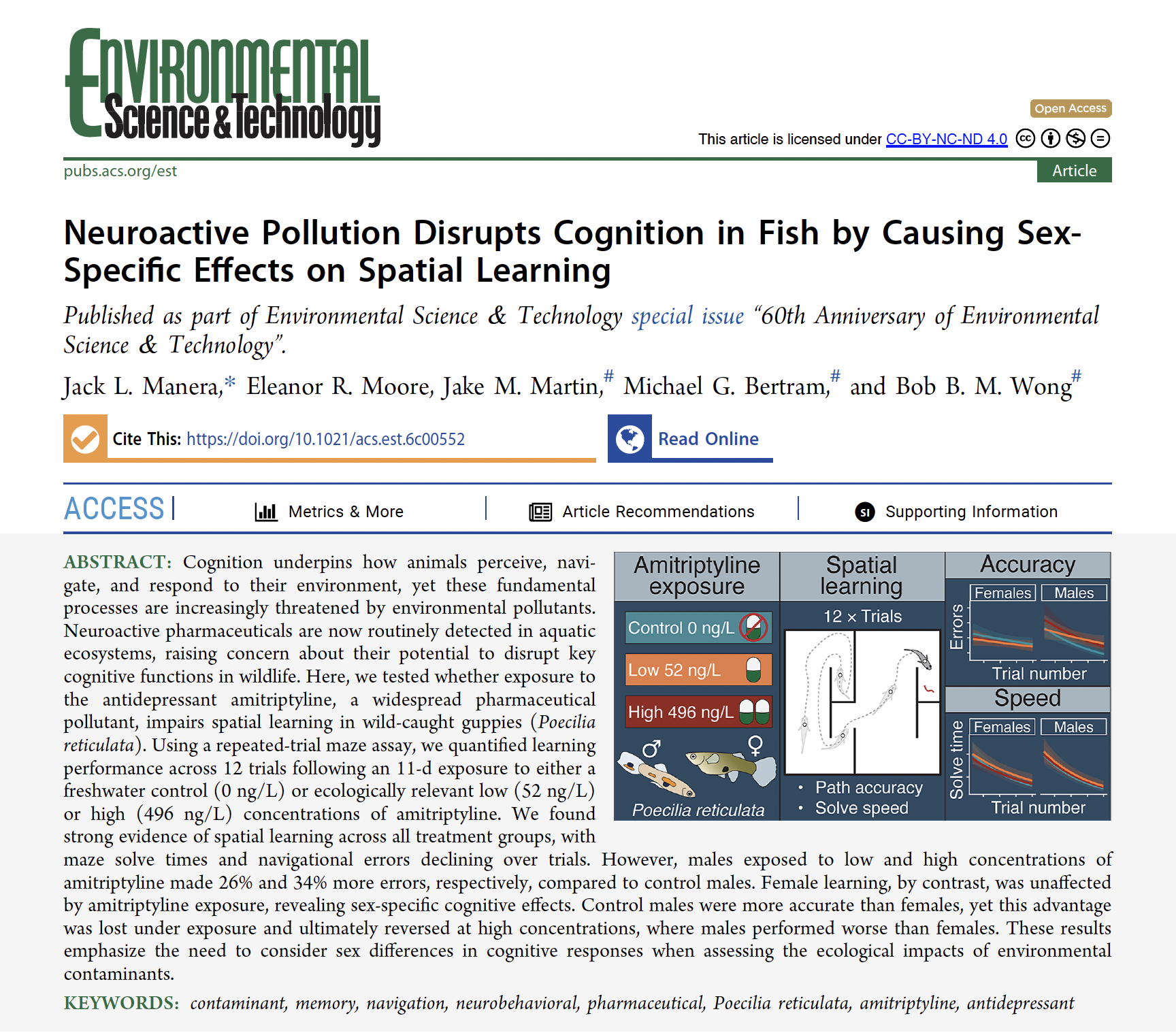
Cognition underpins how animals perceive, navigate, and respond to their environment, yet these fundamental processes are increasingly threatened by environmental pollutants. Neuroactive pharmaceuticals are now routinely detected in aquatic ecosystems, raising concern about their potential to disrupt key cognitive functions in wildlife. Here, we tested whether exposure to the antidepressant amitriptyline, a widespread pharmaceutical pollutant, impairs spatial learning in wild-caught guppies (Poecilia reticulata). Using a repeated-trial maze assay, we quantified learning performance across 12 trials following an 11-d exposure to either a freshwater control (0 ng/L) or ecologically relevant low (52 ng/L) or high (496 ng/L) concentrations of amitriptyline. We found strong evidence of spatial learning across all treatment groups, with maze solve times and navigational errors declining over trials. However, males exposed to low and high concentrations of amitriptyline made 26% and 34% more errors, respectively, compared to control males. Female learning, by contrast, was unaffected by amitriptyline exposure, revealing sex-specific cognitive effects. Control males were more accurate than females, yet this advantage was lost under exposure and ultimately reversed at high concentrations, where males performed worse than females. These results emphasize the need to consider sex differences in cognitive responses when assessing the ecological impacts of environmental contaminants.